Build molecular recognition
at machine speed.

Magnus is an AI-powered, fully automated lab platform that designs, generates, and validates programmable ligands—turning PFAS, toxins, and high-value targets into deployable detection and capture assets in weeks.

Built for high-consequence environments: defense · infrastructure · food · industrial biotech

Biology discovery is the bottleneck.

Biotech has plenty of ideas. What doesn't scale is execution: running enough high-quality experiments—fast, repeatedly, and reproducibly—to turn hypotheses into deployable outputs. Most discovery is still manual, bespoke, and slow.

Magnus exists to remove that bottleneck by making discovery a machine: standardized, automated, and compounding.

A closed-loop discovery engine.

Magnus combines four integrated layers into a single system that improves with every experiment it runs.

Decision Layer

Chooses the highest-value experiments to run next. Prior results, published literature, and computational models feed an engine that prioritizes what matters most—eliminating wasted cycles.

Execution Layer

Automated lanes run biology with consistent controls. Robotic precision removes human variability and enables parallel throughput around the clock.

Learning Layer

Results feed back immediately to improve the next cycle. Sequencing data, enrichment patterns, and failure modes compound into a growing intelligence layer.

Shipping Layer

Outputs are delivered as evidence-backed assets—not research reports. Validated performance, documented behavior, and integration-ready specifications.

The Magnus Loop

Magnus starts from published science and computational simulations, then closes the loop—our decision engine prioritizes experiments, automation runs them, and each iteration sharpens the next until the data says ship.

1

Mine

Literature, simulations, and prior data shape the experimental plan

2

Prioritize

Our decision engine ranks and sequences the highest-value experiments

3

Execute

Automated lanes run selections with built-in controls

4

Learn

Results feed back into the engine—each cycle sharpens the next

5

Ship

Validated assets ship only when the experiments are conclusive

Starting with the fastest assets to commercialize.

Programmable binders and assay-ready components are the "low hanging fruit" for automated discovery: objective metrics, rapid iteration cycles, and immediate demand.
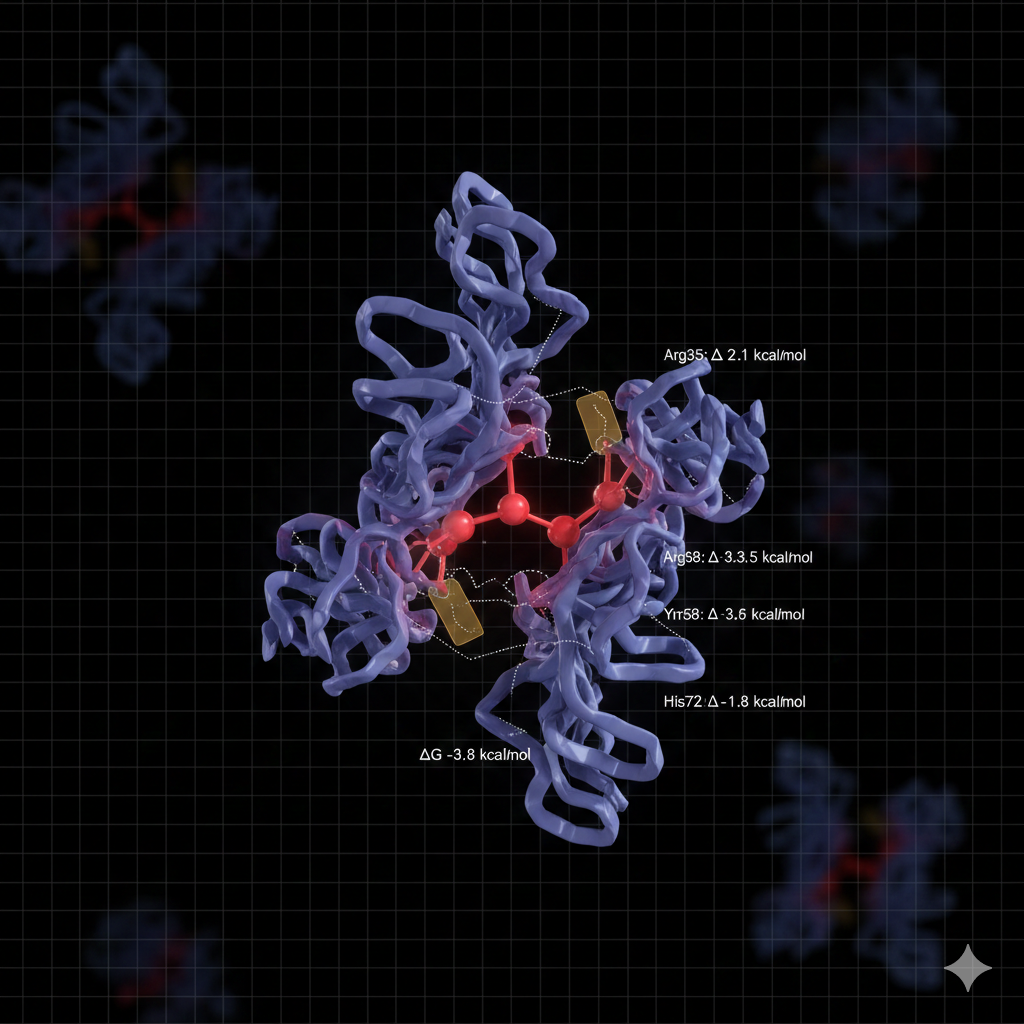
PFAS small-molecule binding — validated binder families with quantified affinity and specificity

PFAS Small-Molecule Binding

Validated binder families with quantified affinity/specificity, cross-reactivity maps across PFAS chemistries, and integration-ready paths for sensing and capture.
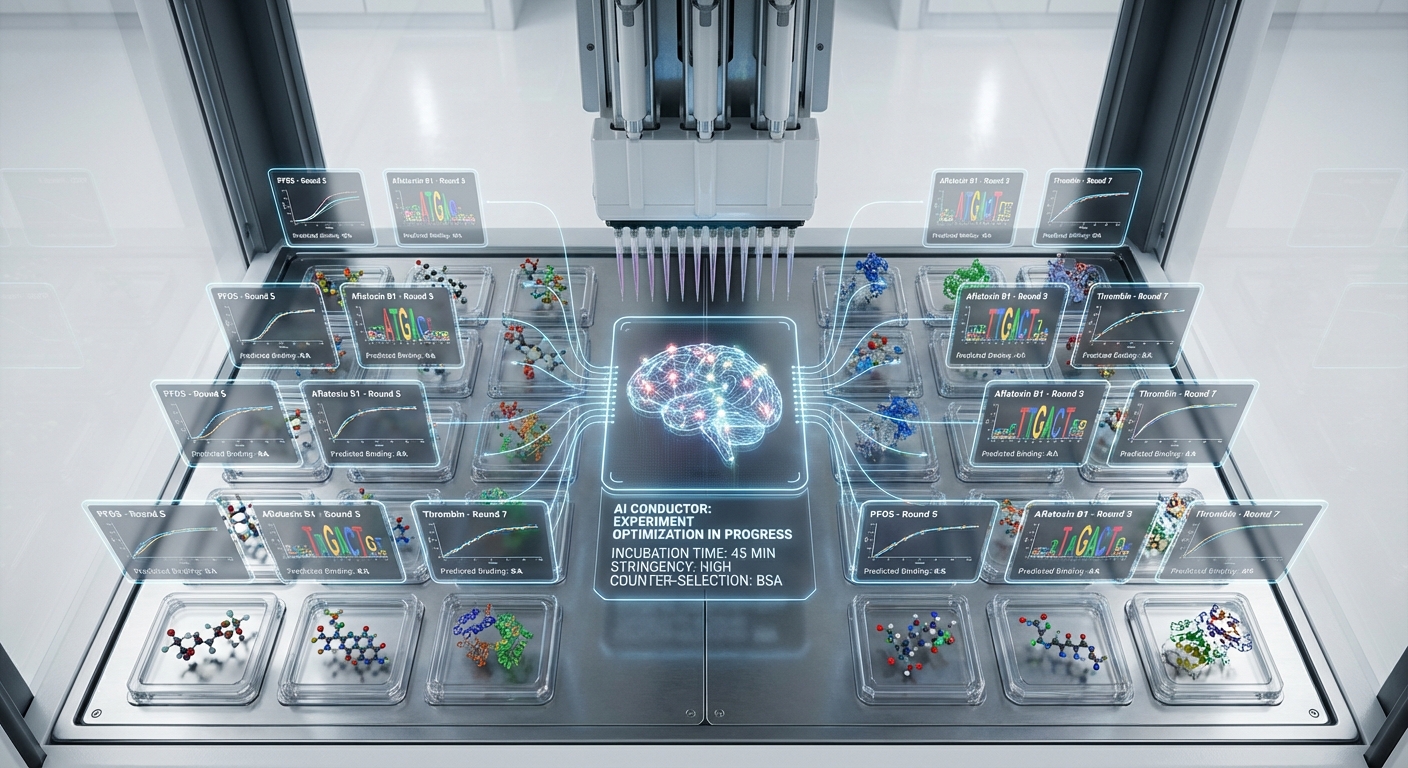
Pathogen detection workflows running on automated systems

Pathogen Detection Workflows

Assay design + validation outputs that plug into real automated detection systems—built for reproducibility, traceability, and deployment.

Panel-ready coverage with expansion roadmaps and evidence packages

Panel-Ready Coverage

Because buyers don't buy one analyte—they buy coverage. Magnus produces panel roadmaps, expansion plans, and evidence packages designed to evolve as requirements change.

Same engine → more asset classes.

Not research. Production outputs.

📊

Validated Performance

Quantified affinity/specificity, documented failure modes, and matrix-tested behavior. Outputs are measured, not estimated.

🔬

Cross-Reactivity Mapped

Because in the real world, specificity is the product. Every deliverable includes behavior across related and interfering compounds.

⚙️

Manufacturing-Ready Deliverables

Sequences/specs plus QC and reproducibility documentation. Assets ship ready for integration, not further development.

📋

Audit-Ready Evidence Packages

Traceability and reporting designed for high-consequence environments from day one. Built for defense and regulatory stakeholders.

Proof You Can Put to the Test

🧪

PFAS

PFOA/PFOS plus expanded PFAS coverage. Built to deliver clear cross-reactivity maps and matrix behavior—so your team can act, not debate.

🛡️

Defense Toxin Panels

Rapid panel generation with evaluation-grade evidence packages. Designed to update as threat lists change.

🌊

Water & Food Contaminants

Detection assets for emerging contaminants across supply chain and environmental matrices. Built to meet the monitoring demands that antibodies can't scale to.

Request a Pilot

Why automated discovery wins

Magnus compounds advantage through every campaign it runs—making future discovery faster, more reliable, and harder to replicate.

Automation-First

Discovery scales when execution stops being the bottleneck. Automated lanes run continuously with consistent controls, reducing variability and compressing timelines.

Evidence-First

Outputs ship only when the data is conclusive. Every deliverable includes traceability, reproducibility, and deployment-ready documentation.

Compounding Advantage

Each campaign improves the system—experiment design, selection strategy, and performance prediction—making future discovery faster and more reliable.

Wedge with Expansion

We start with PFAS and high-urgency detection workflows because they commercialize quickly. The system is designed to expand to additional asset classes over time.

Start with a pilot. Leave with deployable assets.

Run a pilot campaign and receive validated outputs designed for real integration: documented performance, cross-reactivity behavior, and a clear path to deployment and expansion.